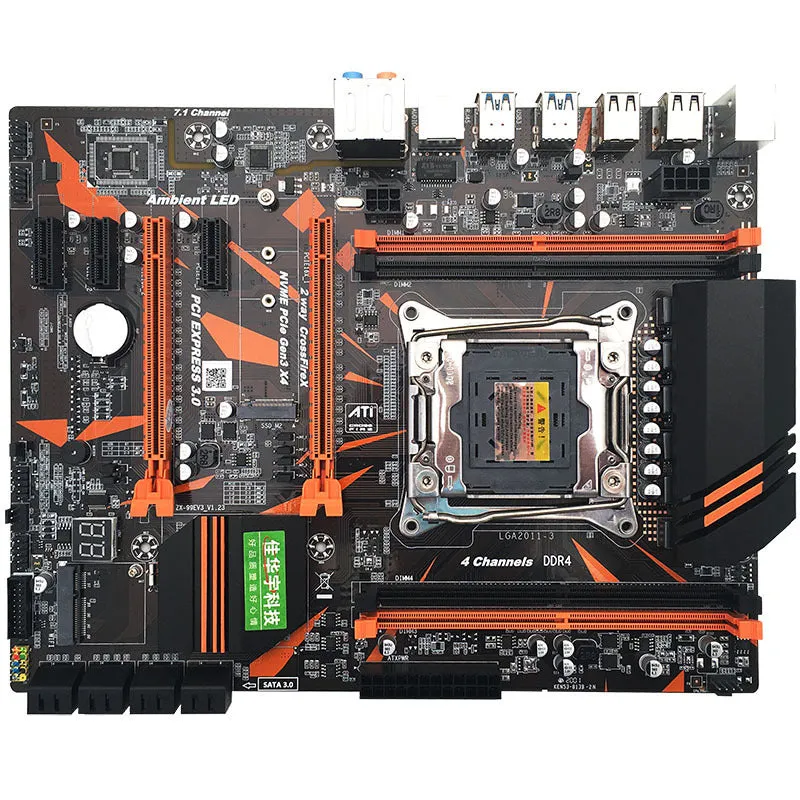
X99 Computer Motherboard LGA2011-3 Socket CPU Four Channel DDR4 Memory, Supports 2011-v3 Xeon E5 and Core i7 Processors with PCI-E x16 Slots, M.2 NVMe Interface, 7.1 Channel Audio, and ATX Form Factor


X99 Computer Motherboard LGA2011-3 Socket CPU Four Channel DDR4 Memory, Supports 2011-v3 Xeon E5 and Core i7 Processors with PCI-E x16 Slots, M.2 NVMe Interface, 7.1 Channel Audio, and ATX Form Factor
X99 LGA2011-3 Motherboard: Quad-Channel DDR4 Platform for Xeon and Core i7 Processors

This X99 chipset motherboard provides a robust foundation for building high-performance desktop systems, particularly suited for workstations, content creation rigs, and enthusiast gaming PCs. Designed around Intel's LGA2011-3 socket, it accommodates both Xeon E5-2600 v3/v4 series server processors and Core i7 Extreme Edition desktop CPUs, offering flexibility in system configuration. The platform's quad-channel DDR4 memory architecture, dual PCI-E x16 expansion slots, and comprehensive storage options make it suitable for demanding applications that benefit from high memory bandwidth and expansion capabilities. With integrated Gigabit networking and 7.1 channel audio, the board delivers essential connectivity without requiring additional expansion cards for most users.
Processor and Memory Support

The motherboard's core compatibility centres on the LGA2011-3 socket, which supports Intel's high-end desktop (HEDT) and workstation processors. This platform balance allows builders to choose between consumer and professional-grade components based on their performance needs and budget considerations.
CPU Compatibility
The LGA2011-3 socket accepts Intel Xeon E5-2600 v3 and v4 series processors, which are designed for workstation and server applications requiring multiple cores and support for ECC memory. Additionally, it supports Core i7 Extreme Edition processors from the Haswell-E and Broadwell-E families, such as the i7-5820K, i7-5930K, and i7-5960X. An important compatibility note: when using Core i7 processors, the system cannot utilise ECC server memory modules simultaneously, requiring standard desktop DDR4 memory instead. This restriction stems from the consumer processors' lack of ECC support in their memory controllers.
Memory Configuration
Four DDR4 DIMM slots arranged in a quad-channel configuration support memory speeds of 2400MHz or 2133MHz, with a maximum capacity of 32GB per slot for a total of 128GB. The platform uniquely accommodates both standard unbuffered desktop memory and registered ECC server memory, providing flexibility for different use cases. For workstation builds focusing on data integrity, ECC memory can be paired with compatible Xeon processors. Gaming and consumer builds would typically utilise higher-speed desktop memory modules. The quad-channel architecture doubles the memory bandwidth compared to dual-channel platforms when all slots are populated with matched modules.
Power Delivery
A four-phase power design supplies stable voltage to the CPU, with power connections including a 24-pin ATX main connector and an 8-pin EPS12V connector. The board can operate with only a 4-pin connection to the EPS12V socket when using lower-power configurations, but utilising the full 8-pin connection is recommended for high-end processors with greater power demands. This power infrastructure supports processors with TDPs up to 165W, covering the full range of compatible Xeon and Core i7 Extreme Edition CPUs.
Expansion and Storage Capabilities

Designed in the standard ATX form factor, this motherboard provides substantial expansion room for graphics cards, storage devices, and additional peripherals. The layout balances high-speed interfaces with legacy connectivity to accommodate both modern components and older devices that users may wish to carry forward from previous builds.
PCI Express Slots
Two PCI-E x16 slots with metal reinforcement support dual graphics card configurations in SLI or CrossFire setups, or can accommodate other expansion cards requiring full bandwidth. Three additional PCI-E x1 slots provide connectivity for sound cards, network adapters, USB expansion cards, or other peripherals. The x16 slots operate at PCI Express 3.0 specifications when populated with compatible processors and graphics cards, offering sufficient bandwidth for high-end gaming GPUs or professional graphics cards used in rendering and simulation workstations.
Storage Interfaces
Eight SATA 3.0 ports operating at 6Gb/s provide connectivity for hard disk drives, SATA SSDs, and optical drives, supporting RAID 0, 1, 5, and 10 configurations for performance or redundancy. One M.2 PCIe NVMe interface offers direct attachment for high-speed solid-state drives, operating at full PCIe bandwidth for significantly faster storage performance compared to SATA-based solutions. This combination allows builders to implement tiered storage strategies—using NVMe for operating systems and applications, SATA SSDs for active project files, and traditional hard drives for archival storage.
External Connectivity
The rear I/O panel includes four USB 3.0 ports and six USB 2.0 ports for peripherals, with additional internal headers for front-panel USB connectivity. A PS/2 combo port maintains compatibility with legacy keyboards and mice, while a Realtek RTL8111H Gigabit Ethernet controller provides network connectivity. Audio outputs support 7.1 channel surround sound through coloured 3.5mm jacks, with the audio section featuring LED accent lighting that responds to audio activity. This comprehensive connectivity suite eliminates the need for additional expansion cards for most users while providing upgrade paths through the available PCIe slots.
Build Considerations and Support
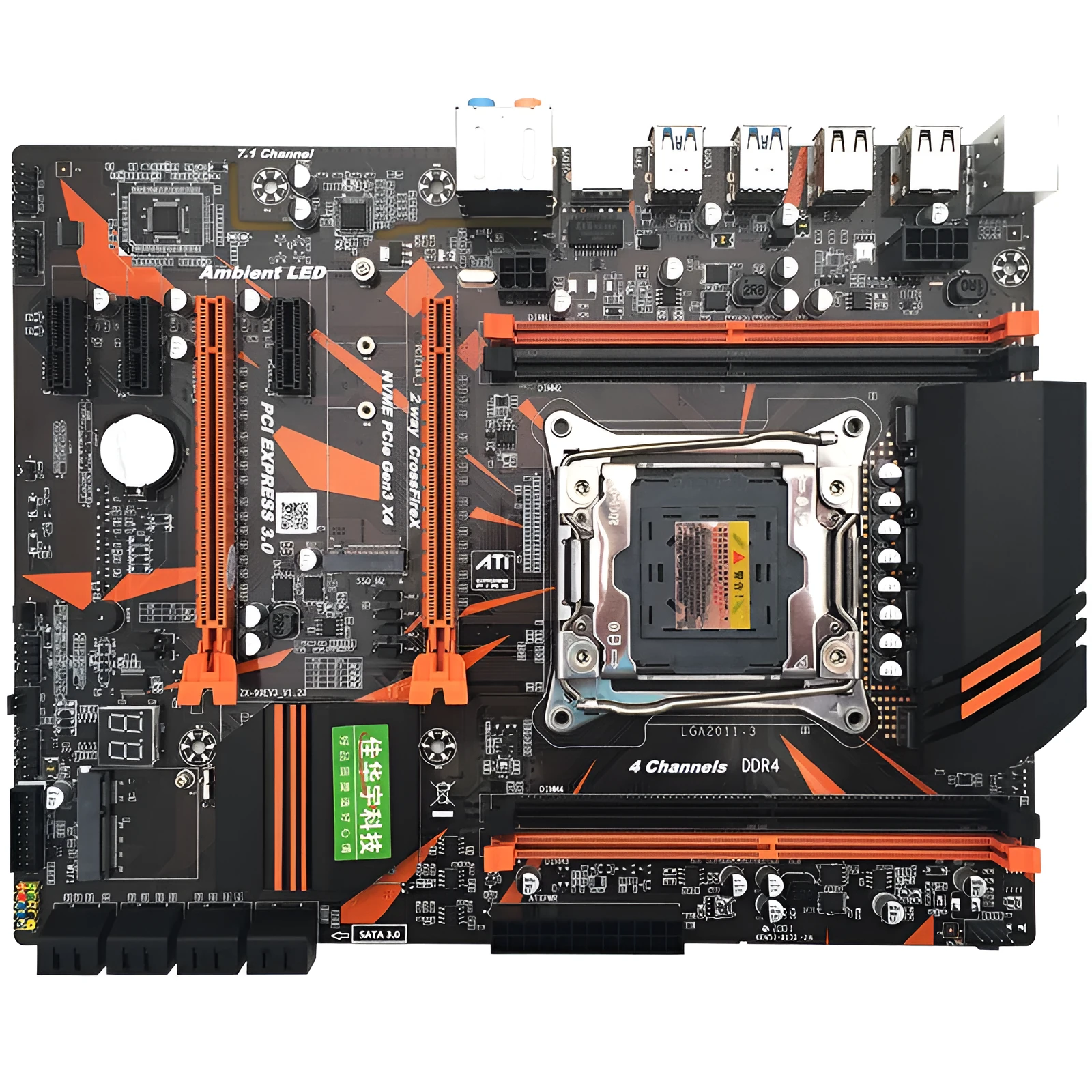
This motherboard incorporates several features aimed at simplifying the building process and troubleshooting potential issues. From physical construction elements to diagnostic tools, these aspects help ensure reliable operation and easier problem resolution should components not function as expected during initial setup or throughout the system's lifespan.
Construction and Design Elements
The PCB utilises FR-4 material with a black substrate, though the specific colour tone may vary between manufacturing batches as part of continuous product optimisation. Solid capacitors are employed throughout the power delivery sections for improved longevity under high thermal loads. Metal-reinforced PCIe and memory slots provide additional mechanical strength to withstand the insertion and removal of heavy graphics cards and memory modules. An integrated audio section with colour-changing LEDs adds visual interest to builds with windowed cases, with the lighting patterns correlating to audio signal activity.
Diagnostic Features
A digital fault diagnosis display shows POST code numbers during system startup, helping identify specific components that may be preventing successful boot. When combined with the integrated buzzer that emits audible beep codes, these tools significantly simplify troubleshooting of memory, processor, graphics card, or storage issues. The diagnostic display continues to operate even if the primary graphics output isn't functioning, making it particularly valuable when debugging display-related problems or GPU compatibility issues.
Warranty and Compatibility Notes
The motherboard carries a three-year warranty comprising one year of free repair or replacement followed by two years of cost-based maintenance service, administered through the manufacturer or retailer. Users should note that specific slot colours and minor component placements may vary between production batches as part of ongoing product refinement. While the board supports both Xeon and Core i7 processors, the memory compatibility differs: Xeon processors work with either standard or ECC memory, while Core i7 processors require standard desktop memory exclusively. This distinction is important when planning system builds to ensure all components work harmoniously together.